Your AI Digital Human: Modeled on Whom?
This article is Part Three of our series “The 3D Lifecycle of AI” (deployment), current as of mid-2026.
Introduction
AI digital humans, AI voice-overs, and AI micro-dramas are becoming the most visible applications of generative AI. Their legal risk turns on a threshold question: who is this digital human modeled on?
Key Takeaways
- Digital humans come in two kinds. When one is modeled on a real person, the main risk is not copyright but the right of publicity — state-law rights in likeness and voice. When one copies a fictional character, the risk returns to copyright, with trademark layered on top.
- The U.S. right of publicity is federalizing. The NO FAKES Act has cleared the Senate Judiciary Committee, and it expressly does not preempt state law, so companies will face a federal layer stacked on top of the state patchwork.
- Whenever a digital human is built from a real person, the consent chain must cover AI replication, scope of use, duration, even post-mortem rights — and it must hold up separately under Chinese, U.S., and EU rules.
Note: This article is for general informational purposes only and does not constitute legal advice or create an attorney–client relationship; the legislation and cases in this area are evolving quickly. Please consult qualified counsel about specific matters.
1. Two Kinds of Digital Humans, Two Bodies of Law
Digital humans broadly come in two kinds, and they are governed by two entirely different bodies of law. The first is modeled on a real person: it replicates someone’s face or voice to make a talking, selling avatar, an AI voice-over, or an AI micro-drama. The second does not start from a real person at all; it uses a copyrighted fictional character. To locate the risk, first work out which kind you are building.
For the first kind, the main exposure is usually not copyright but rights in likeness and voice. In the United States, that bundle of rights is called the right of publicity. It is structured very differently from copyright, and it is federalizing fast. It is the main subject of this article.
The second kind typically borrows protected fictional characters — Disney characters, Barbie, popular anime figures — and the risk returns to copyright, usually with trademark stacked on top.
Same digital human, different source, different law. We start with the first kind, which is more common and more complicated.
2. Cloning a Real Person: Likeness, Voice, and the Right of Publicity
A Different Rulebook from Copyright
Copyright is a single federal system, anchored by the human-authorship requirement. The right of publicity is a patchwork of state law: roughly half the states have statutes, the rest rely on common law, and they differ widely — whether voice is protected, how long post-mortem rights last, whether merely making people think of someone counts as infringement. The practical consequence is that a digital-human product rolled out across the United States is exposed to the strictest state’s law. That is nothing like copyright’s one-rulebook logic.
The Pre-AI Impersonation Cases Now Matter More Than Ever
Applying the right of publicity to AI is not a new problem. Three older Ninth Circuit cases set the rules. Midler v. Ford (1988) and Waits v. Frito-Lay (1992) both involved hiring singers to imitate a famous voice for a commercial; both plaintiffs won under California’s common-law voice-misappropriation doctrine, and Waits also prevailed on false endorsement under the Lanham Act. In White v. Samsung (1992), the defendant used a robot in a blonde wig posed to turn letters; the Ninth Circuit held that the common-law right of publicity is not limited to the name, likeness, and voice enumerated in the statute — “evoking her identity” was enough. One detail is telling: Midler’s and White’s claims under California’s statute (Civil Code § 3344) both failed; what won was the common law. That common-law line grew out of the appropriation branch of privacy law, is now generally called the right of publicity, and protects the commercial value of identity. The core rule: what is infringed is the identifiability of a person, not merely the verbatim copying of a face or a recording. AI face and voice cloning simply industrializes an old tort at scale.
The rule was quickly tested in the AI era.
In Lehrman v. Lovo (S.D.N.Y., July 2025), two voice actors alleged that the AI voice company Lovo trained a voice model on their recordings without permission, then sold cloned, commercially usable versions of their voices. The court dismissed the copyright and Lanham Act claims, reasoning that copyright forbids copying the fixed recording, not imitating a person’s voice. A voice as a product is not a source-identifying trademark either. What survived were the claims under the state right of publicity (New York Civil Rights Law §§ 50–51, the state’s statutory protection for name, portrait, and voice) and state consumer-protection law. The case was later stayed after Lovo filed for bankruptcy in May 2026.
A parallel voice-cloning dispute, Vacker v. ElevenLabs (D. Del.), was brought by narrators who alleged that ElevenLabs cloned their voices without permission and trained on their audiobooks. It settled in November 2025, one of the first settlements in this wave of AI training and voice litigation. Lehrman and Vacker point to the same lesson: the federal copyright and Lanham Act routes mostly fail, and the state right of publicity is what actually works. That is precisely the gap the federal NO FAKES Act is meant to fill.
The visual side is trending the same way. Young v. NeoCortext (9th Cir., Dec. 2024) involved an AI face-swap app whose operator argued that the output fell within the domain of copyright, which should preempt the state right of publicity. The Ninth Circuit rejected the defense: the app used people’s likenesses to attract paying users — a commercial exploitation of identity that has nothing to do with copyright in a work. The once-routine tactic of using copyright law to keep publicity claims out of court has visibly weakened in the Ninth Circuit.
Blending Several Faces Is Not a Safe Harbor
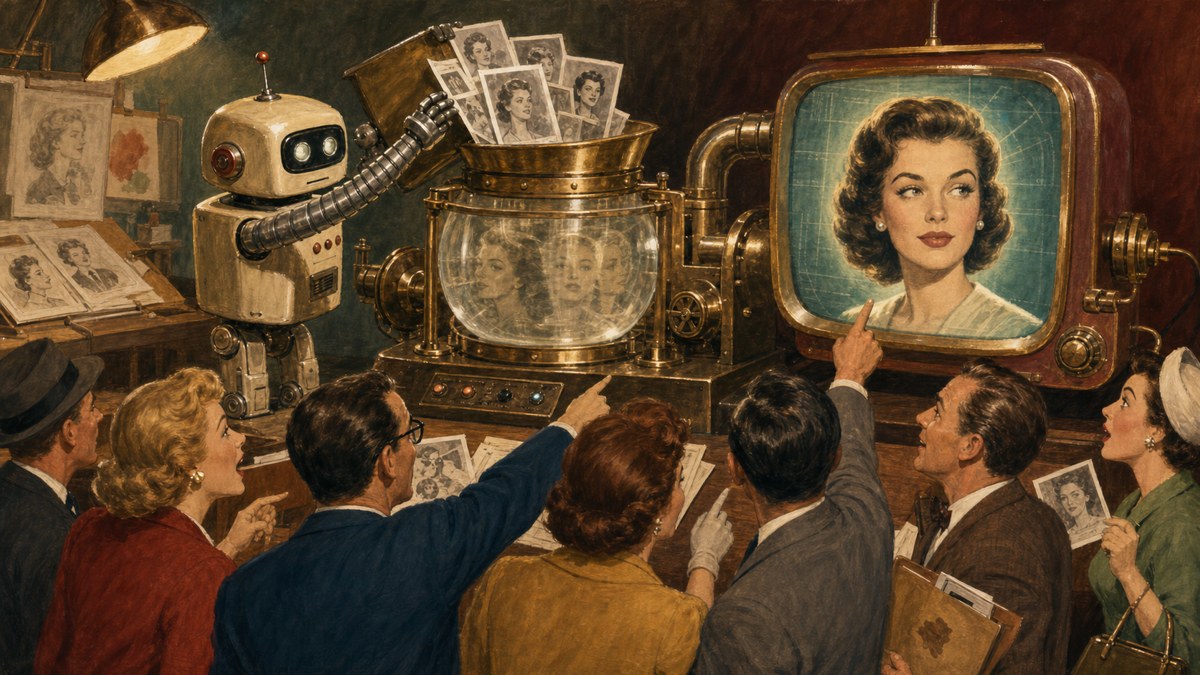
A common workaround is to blend several faces so the output “resembles someone, but not exactly.” Under U.S. law, that path does not hold. The right of publicity looks at identifiability on the output side, no matter how many faces went in. White v. Samsung already shows that no human face need appear at all. In New York, Onassis v. Christian Dior involved a real model who closely resembled Jacqueline Onassis — Onassis herself never appeared — and the ad still violated the New York Civil Rights Law. If the relevant public can tell who it is, the law treats it as that person’s likeness.
In litigation, identifiability is rarely proven from the face alone. Plaintiffs pull the training materials (whether the plaintiff’s photos were in the inputs is one discovery request away), the marketing copy (“celebrity-style” language is an admission), and social-media reactions (a comment section that collectively recognizes a star is ready-made evidence). Blending toward a particular person does not help, however finely you blend.
The question has already reached the courts. In May 2026, the actor Q’orianka Kilcher sued James Cameron and Disney in the Central District of California, alleging that Neytiri in Avatar was built on her face at age fourteen — copied layer by layer from sketches to sculpture to a laser-scanned digital model. Whether a digital character may lawfully be generated from a real person’s facial structure is now being tested in that case.
Conversely, even where the output is genuinely unidentifiable, the input side is a separate checkpoint. Using real people’s photos as blending material can trigger Illinois’s Biometric Information Privacy Act (BIPA) and its per-violation statutory damages for facial-geometry data. In China, the Beijing Internet Court’s first “AI face-swap” app case (2024) drew the same line: because the facial features had been replaced, portrait rights were not infringed — but collecting and processing the plaintiff’s videos without consent violated her personal-information rights. In short, the output must clear the publicity and portrait-rights gate, and the input must clear the personal-information and biometrics gate. Two gates, cleared separately.
New Legislation: States First, a Federal Layer on Top
Two legislative tracks are moving at once. At the state level, Tennessee’s 2024 ELVIS Act (Ensuring Likeness, Voice, and Image Security Act) was the first state statute to extend publicity protection explicitly to AI voice cloning, with both criminal and civil liability. At the federal level, the NO FAKES Act (S. 4591) would create a nationwide “digital replica” right covering voice and visual likeness, with licensing rules, post-mortem rights, a platform notice-and-takedown mechanism, and free-speech carve-outs. So far, however, the bill has only cleared the Senate Judiciary Committee (June 18, 2026); it awaits a floor vote, the House version remains in committee, and as of mid-2026 it is not law.
The states have gone far beyond Tennessee. California’s AB 1836 and AB 2602 (both effective January 1, 2025) respectively brought deceased celebrities’ digital replicas into the post-mortem right of publicity and made broad, vaguely described digital-replica clauses in performer contracts unenforceable. Illinois amended its Right of Publicity Act (effective January 2025) to cover digital replicas of voice and likeness and to impose liability on those who facilitate distribution. New York enacted two statutes in December 2025 — one expanding Civil Rights Law § 50-f on deceased performers’ digital replicas, the other requiring disclosure when advertising uses AI-synthesized performers (effective June 9, 2026). Washington, Pennsylvania, and other states are following. The patchwork gained several large pieces in a single year, and no two states match.
One point matters most: the NO FAKES Act expressly does not preempt state law. Even if the federal bill passes, the Tennessee ELVIS Act and its siblings remain in force, and companies will face a federal layer stacked on the state patchwork rather than a simpler, unified rule. In the era before any federal publicity right, plaintiffs routinely reached federal court through the “false endorsement” prong of Lanham Act § 43(a); a digital human that misappropriates a real person’s likeness for commercial endorsement fits that section as well.
Beyond legislation, the industry is self-regulating. In October 2025, after Bryan Cranston’s likeness was generated by Sora 2 without consent, OpenAI and the performers’ union SAG-AFTRA reached a common position, and Sora 2 moved to an opt-in regime for real people’s voices and likenesses. SAG-AFTRA’s 2026 film and television agreement, in turn, created the first notice-and-bargaining obligations for fully synthetic AI performers.
3. Using Fictional Characters: Copyright and Trademark
The second kind of digital human does not copy a real person. A sizable share of AI digital humans, AI micro-dramas, and virtual streamers borrow protected fictional characters — Disney animation characters, Barbie, popular anime figures — using “face fusion” (blending an existing character’s look with a human face) to generate an avatar fit for commercial promotion. For these products the risk returns squarely to copyright, usually with trademark layered on top. What is copied is no longer a natural person’s identity, but a character in which someone else holds copyright and often trademark rights.
A mature visual character is itself protected expression. U.S. courts confirmed long ago that cartoon and comic characters that are sufficiently concrete and distinctive can be protected independently of the works they appear in (Walt Disney Productions v. Air Pirates; DC Comics v. Towle); unauthorized copying or adaptation falls squarely within the owner’s exclusive rights of reproduction and preparation of derivative works (17 U.S.C. § 106(1)–(2)). In copyright terms, “face fusion” is precisely the making of a derivative work. So long as the output retains the character’s protected expressive elements, fusing it with anyone’s face does not launder the infringement. Disney, and Barbie’s owner Mattel, have always been active enforcers.
Trademark is the second layer stacked on top. “Barbie” is a registered Mattel trademark, and Disney’s character names and images are protected as marks as well. A commercial digital human built on them invites the public to assume authorization or affiliation, which is trademark infringement or false endorsement under Lanham Act § 43(a). Fair use and parody offer narrow, heavily case-specific room here; trading purely on a character’s fame to attract traffic and close sales rarely earns their protection.
None of this disappears across borders. Character copyrights are equally protected in China and the EU, and Disney, Mattel, and their peers enforce actively in China as well. The Guangzhou “Ultraman” case, which this series’ China installment will discuss, held an AIGC platform liable precisely for generating protected character images. For companies planning a character-based digital human, there are usually only two viable paths: obtain the character’s copyright and trademark licenses in advance, or use original characters of your own.
4. The Cross-Border Matrix: China, the U.S., and the EU
For digital-human products aimed at global markets — especially those shipping out of China — the exposure does not stop at the United States.
In China, the Civil Code’s personality-rights book protects portrait rights (Articles 1018–1019) and extends that protection, by reference, to the voice (Article 1023). In 2024 the Beijing Internet Court decided the country’s first AI voice-infringement case, holding that converting a dubbing artist’s voice into an AI product and commercializing it was infringement. On the regulatory side, China’s deep-synthesis and generative-AI rules require consent from the person whose face or voice is synthesized, plus conspicuous labeling of the synthetic content. In the EU, the GDPR (biometric, image, and voice data) and the AI Act’s deepfake-labeling obligations apply. Denmark has gone further, proposing to protect every person’s face and voice as a neighboring right under its Copyright Act — applicable to everyone, with notice-and-takedown and platform liability — the world’s first attempt to regulate deepfakes through a copyright framework. The amendment was slated to take effect at the end of March 2026 but lapsed when Denmark’s March 24 snap election dissolved parliament; as of mid-2026 it awaits reintroduction.
Chinese courts have already split. Beijing found infringement where the public in the relevant field could identify the voice. A Chengdu court, in a similar case in late 2024, dismissed a dubbing artist’s claims in full because the general public could not identify her, and articulated a duty to tolerate technical similarity. The identifiability threshold is not yet uniform within China.
More significant for exporters, China is drafting the world’s first dedicated digital-human regulation. In April 2026, the Cyberspace Administration of China published for comment its draft Measures for the Administration of Digital-Human Information Services, which would require a persistent “digital human” label in the display area, separate consent before modeling an identifiable real person, and special restrictions concerning minors. Layered on the Labeling Measures for AI-generated synthetic content (in force since September 1, 2025, with a mandatory national standard requiring both explicit and implicit labels), China’s governance of digital humans is moving from individual judgments toward dedicated legislation.
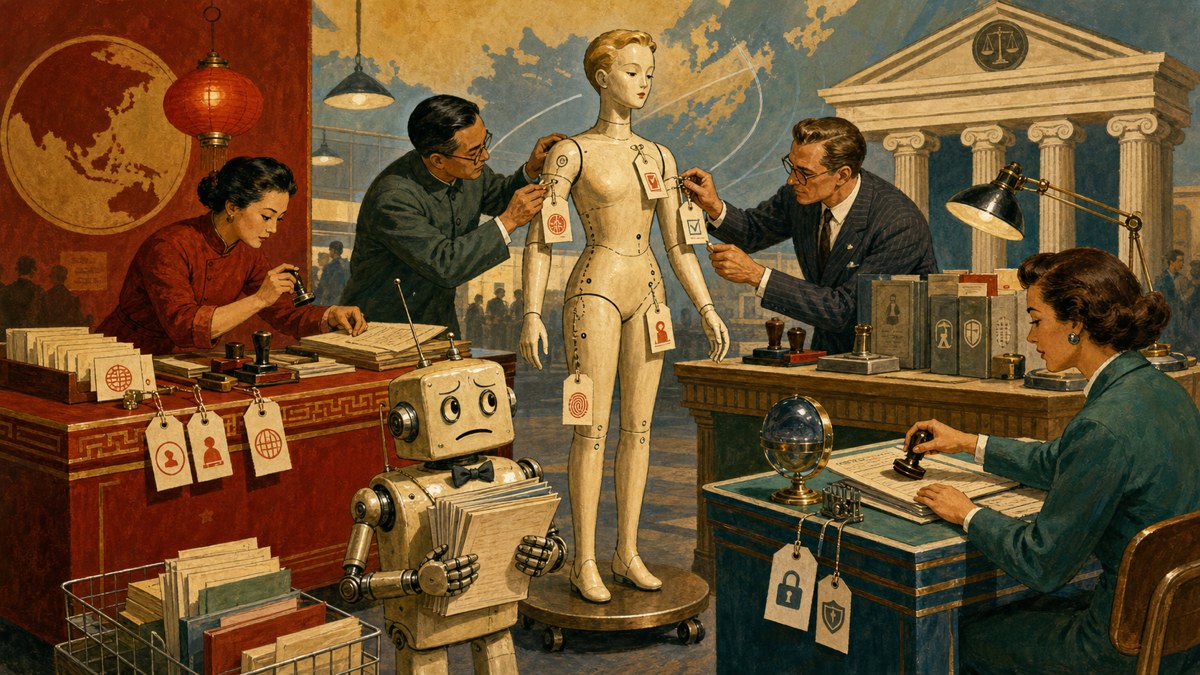
The result: one digital-human product can sit simultaneously under China’s rules (personality rights and synthetic-content labeling), U.S. rules (state publicity rights and NO FAKES), and EU rules (data protection and deepfake labeling) — three rulebooks whose consent requirements, labeling duties, and post-mortem rights do not line up.
5. Practical Steps for Companies
First, the consent chain. Any digital human built from a real person — an actor, an influencer, a deceased celebrity — needs consent or licensing that covers AI replication, scope of use, duration, and, where relevant, post-mortem rights, and the chain must hold up in every jurisdiction the product touches. Products that “revive” deceased celebrities or deceased relatives call for the closest scrutiny of post-mortem rights.
Second, labeling. Conspicuous labeling of synthetic content is already mandatory in China and the EU, and the United States is moving in the same direction. Labels are both a compliance obligation and a way to blunt deception and infringement claims.
Third, map the exposure by jurisdiction and pre-build takedown. Chart the product’s exposure state by state and country by country, design to the strictest standard, and stand up a notice-and-takedown pipeline on the platform side so the product can plug into NO FAKES-style compliance mechanisms.
6. Conclusion
Digital humans sit at the intersection of three risks: thin and uncertain copyright ownership, a federalizing patchwork of publicity rights, and cross-border synthetic-media regulation stacking on top. For a digital human modeled on a real person, the most dangerous misreading is to treat it as a copyright problem. Treat it as a problem of likeness, voice, and consent — that is the real homework. Where a digital human borrows a protected fictional character instead, the problem returns to copyright and trademark, which is why this article keeps the two kinds apart. In the end, what determines the risk is not whether you used AI, but whom you copied — a real person, or a protected character. For the complete Chinese rulebook, see this series’ China installment, One AI Product, Two Rulebooks: China vs. the U.S.
Main Sources
Midler v. Ford Motor Co., 849 F.2d 460 (9th Cir. 1988); Waits v. Frito-Lay, Inc., 978 F.2d 1093 (9th Cir. 1992); White v. Samsung Elecs. Am., Inc., 971 F.2d 1395 (9th Cir. 1992); Lehrman v. Lovo, Inc., No. 24-cv-3770, 2025 WL 1902547 (S.D.N.Y. July 10, 2025); Young v. NeoCortext, Inc., 690 F. Supp. 3d 1091 (C.D. Cal. 2023), aff’d, No. 23-55772 (9th Cir. Dec. 5, 2024) (unpublished mem.); Vacker v. ElevenLabs, Inc., No. 1:24-cv-00987 (D. Del. filed 2024); Onassis v. Christian Dior—N.Y., Inc., 122 Misc. 2d 603, 472 N.Y.S.2d 254 (N.Y. Sup. Ct. 1984); Kilcher v. Cameron & Walt Disney Co. (C.D. Cal., filed May 5, 2026); Walt Disney Prods. v. Air Pirates, 581 F.2d 751 (9th Cir. 1978); DC Comics v. Towle, 802 F.3d 1012 (9th Cir. 2015); 17 U.S.C. § 106(1)–(2); Lanham Act § 43(a), 15 U.S.C. § 1125(a); Illinois Biometric Information Privacy Act, 740 Ill. Comp. Stat. 14; Tennessee ELVIS Act, Tenn. Code Ann. § 47-25-1101 et seq. (2024); Cal. A.B. 1836 (2024); Cal. A.B. 2602 (2024); 765 Ill. Comp. Stat. 1075 (2025); N.Y. Civ. Rights Law § 50-f (McKinney 2025); N.Y. S. 8420-A/A. 8887-B (2025) (synthetic-performer ad disclosure, eff. June 9, 2026); NO FAKES Act, S. 4591, 119th Cong. (2026); China Civil Code arts. 1018–1019, 1023; Beijing Internet Court, AI voice case, (2023) Jing 0491 Min Chu No. 12142; Beijing Internet Court, first “AI face-swap” app case (judgment June 20, 2024); Chengdu Railway Transport First Court, (2024) Chuan 7101 Min Chu No. 8969; Cyberspace Administration of China, draft Measures for the Administration of Digital-Human Information Services (Apr. 2026); Measures for Labeling AI-Generated Synthetic Content (eff. Sept. 1, 2025); Denmark, draft deepfake amendment to the Copyright Act (originally set for Mar. 31, 2026; lapsed after the March 2026 snap election).
In This Series
This is Part Three (deployment) of our series “The 3D Lifecycle of AI.” Previously, Part Two (the output side): What Your Company Creates with AI May Not Belong to You. Next up: When AI Imitates an Artist’s Style, Does the Law Step In? See the full series index.
你的 AI 数字人,以谁为原型
本文是《AI 的 3D 生命周期》系列第三篇(运营),内容更新至 2026 年年中。
引言
AI 数字人、AI 配音与 AI 短剧,正成为最热门的生成式 AI 应用。它的法律风险,首先取决于一个前置问题,这个数字人是以谁为原型的。
提要
- 数字人分两种。以真人为原型的,主要风险不是版权,而是各州的公开权,即肖像与声音的权利;复制虚构角色的,风险回到版权,并叠加商标。
- 美国的公开权正在联邦化。NO FAKES 法案已获参议院司法委员会通过,且明确不取代州法,企业面对的将是联邦加各州的双层规则。
- 凡以真人构建数字人,授权链须覆盖 AI 复制、使用范围、期限乃至死后权利,并按中国、美国、欧盟三套规则分别核验。
说明:本文为一般性信息,不构成法律意见,也不构成委托代理关系;相关立法与个案仍在快速演变。具体问题请咨询专业律师。
一、两种数字人,两套法律
数字人大体分两种,适用的是两套完全不同的法律。第一种以真实的人为原型,复制某个真人的面部或声音,做成会说话、会带货的数字人、AI 配音或 AI 短剧。第二种不从真人出发,而是用受版权保护的虚构角色。判断风险在哪里,先要分清自己做的是哪一种。
第一种复制真人,主要风险往往不是版权,而是肖像权与声音权。在美国,这套权利被称为公开权(right of publicity)。公开权结构与版权非常不同,而且正在迅速联邦化。这是本篇的主体。
第二种经常采用迪士尼角色、芭比这类受版权保护的虚构形象,风险则回到版权,并往往叠加商标。
同一个数字人,来源不同,适用法律就不同。下文先讲更常见、也更复杂的第一种。
二、复制真人,肖像、声音与公开权
(一)公开权是另一套规则
版权是联邦统一制度,最根本的是“人类作者”这个标准。公开权则是一张州法拼图,约一半的州有成文法,其余按照普通法,彼此差异极大。声音是否受保护、死后权利存续多少年、是否连让人联想到某人都算侵权,各州答案不一。直接后果是,一个面向全美铺开的数字人产品,等于同时暴露在最严格的那个州的法律之下。这与版权一套规则走天下的逻辑,完全不同。
(二)AI 之前的“模仿秀”判例,如今格外重要
公开权对 AI 的适用,并非全新问题。第九巡回法院的三件旧案早已确立规则。Midler v. Ford(1988 年)与 Waits v. Frito-Lay(1992 年)都是找人模仿歌手嗓音做广告,两案原告依加州普通法的声音盗用胜诉,Waits 还同时赢下《兰哈姆法》的虚假代言。White v. Samsung(1992 年)里被告用的是一个戴金色假发、摆出翻字母姿势的机器人,第九巡回认定,普通法公开权保护的不限于成文法列举的姓名、肖像与声音,“唤起了她的身份”即可主张。一个细节很说明问题,Midler 与 White 依加州成文法(民法典第 3344 条)提出的请求都失败了,赢的是普通法。这条普通法路线由隐私法中的“盗用”分支发展而来,如今通称公开权,保护的是身份的商业价值。核心规则是,所侵犯的是身份的可识别性,并不限于照搬那张脸或那段录音。AI 的面部与声音克隆,只是把这一既有的违法行为工业化、规模化了。
这套规则在 AI 时代很快被检验。
在 Lehrman v. Lovo(纽约南区,2025 年 7 月)中,两名配音演员指控 AI 语音公司 Lovo 擅自用其录音训练语音模型,再克隆出可商用的声音对外出售。法院驳回了版权与《兰哈姆法》的请求,理由是版权只禁止复制那段固定的录音,不禁止模仿一个人的声音。声音作为产品本身,也不构成可标示来源的商标。得以继续推进的,是依州公开权(纽约《民权法》第 50、51 条,该州以此成文法保护姓名、肖像与声音)与州消费者保护法提出的请求。此案之后因 Lovo 于 2026 年 5 月申请破产而中止。
同类的声音克隆纠纷还有 Vacker v. ElevenLabs(特拉华联邦地区法院)。几位配音演员指控 AI 语音公司 ElevenLabs 未经许可克隆其声音、并以其有声书训练模型。该案于 2025 年 11 月以和解结案,是这一波 AI 训练与声音侵权诉讼中率先和解的案件之一。Lehrman 与 Vacker 指向同一条经验,联邦版权与《兰哈姆法》的路径大多走不通,真正走得通的是州公开权。这也正是联邦 NO FAKES 法案想要填补的空缺。
视觉形象方面也有同样倾向的判决。Young v. NeoCortext(第九巡回,2024 年 12 月)涉及一款 AI 换脸应用,被告主张换脸产出落入版权范畴,应排除(preempt)州公开权的适用,第九巡回否定了这一抗辩,理由是被告用他人形象为应用招徕付费用户,针对的是形象的商业利用,与作品版权无关。以版权法把公开权挡在门外这条常见抗辩,在第九巡回法院已明显变弱。
(三)混合几张脸,不是安全区
常见的侥幸方案,是把几张脸混在一起,让产出“像某个人,但不完全一样”。这条路在美国法下并不成立。公开权看的是输出端的可识别性,不管你混了几张脸。上文的 White v. Samsung 已经说明,连人脸都不必出现。纽约的 Onassis v. Christian Dior 用的是长相酷似杰奎琳的真人模特,本人从未出镜,同样被判违反纽约《民权法》。相关公众认得出是谁,法律就按谁的肖像处理。
可识别性在诉讼中如何证明,往往不靠那张脸本身。原告会调取训练素材(他的照片在不在输入里,证据开示一查便知)、营销话术(“明星同款”一类文案即是自认)、以及社媒反应(评论区集体认出某明星,是现成的证据)。朝着某个人去混合,混得再碎也没有用。
这一问题已经进入法院。2026 年 5 月,演员 Q'orianka Kilcher 在加州中区联邦法院起诉 James Cameron 与迪士尼,主张《阿凡达》的 Neytiri 一角以她 14 岁时的面部为结构底模,经素描、雕塑到激光扫描的数字模型层层复制而成。以真人面部为底模生成数字角色,其合法性正在这起新案中接受检验。
反过来,即便输出端真正做到了无人可识别,输入端仍是独立的一道关。用真人照片作混合素材,在伊利诺伊会触发《生物识别信息隐私法》(BIPA)对面部几何数据的按次法定赔偿。在中国,北京互联网法院 2024 年的首例“AI 换脸”软件案给出了同样的分工,面部特征既已替换,不构成侵害肖像权,但未经同意收集、处理原告的出镜视频,构成对个人信息权益的侵害。一句话,输出端过公开权与肖像权的关,输入端过个人信息与生物识别的关,两道关各自要过。
(四)新立法,州先行、联邦叠加
两条立法线正在同时推进。州一级,田纳西州 2024 年的 ELVIS 法(Ensuring Likeness, Voice, and Image Security Act)是首部明确将公开权保护延伸至 AI 声音克隆的州法,兼设刑事与民事责任。联邦一级,NO FAKES 法案(S.4591)拟设立一项全国性的“数字复制品”权,覆盖声音与视觉形象,并配套许可、死后权利、平台“通知—删除”机制以及言论自由方面的例外。不过,该法案迄今仅于 2026 年 6 月 18 日获参议院司法委员会通过,尚待全院表决,众议院版本仍在委员会审议,截至 2026 年年中尚未成为正式法律。
州一级的动作远不止田纳西。加州 2024 年的 AB 1836 与 AB 2602(均 2025 年 1 月 1 日生效),前者把已故名人的数字复制品纳入死后公开权,后者将演艺合同中宽泛、未具体描述用途的数字复制品授权条款判为不可执行。伊利诺伊修订《公开权法》(2025 年 1 月生效),将声音、形象的数字复制品一并纳入,并对促成传播者课责。纽约更在 2025 年 12 月连续颁布两部法律,一部扩张《民权法》第 50-f 条对已故者数字复制品的保护,另一部要求广告使用 AI 合成演员须作披露(2026 年 6 月 9 日生效)。华盛顿、宾夕法尼亚等州也相继跟进。州法拼图这一年又拼上一大块,且各州标准不一。
一个关键点是,NO FAKES 法案明确不抢占州法。也就是说,即便联邦立法落地,田纳西 ELVIS 法等州法依然有效,企业面对的将是“联邦 + 州”两层叠加,而非更简单的统一规则。此外,在没有联邦公开权的年代,原告常借联邦《兰哈姆法》第 43(a) 条的“虚假代言”在联邦法院主张权利。数字人冒用真人形象作商业背书,同样适用这一条款。
立法之外,产业界也在自我约束。2025 年 10 月,Bryan Cranston 的形象未经同意被 Sora 2 生成后,OpenAI 与演员工会 SAG-AFTRA 达成共识,Sora 2 对真人声音、形象改采选择加入(opt-in)。SAG-AFTRA 2026 年的新影视合约,则首次为纯 AI 合成演员设定通知与谈判义务。
三、采用虚构角色,版权与商标
第二种数字人并不复制真人。市面上相当一部分 AI 数字人、AI 短剧与虚拟主播,取用的是受版权保护的虚构角色,也就是将迪士尼的动画角色、芭比(Barbie)或热门动漫形象等,通过“融脸”(将既有角色形象与人脸融合)生成可用于商业推广的数字人。对这类产出,风险恰恰回到了版权,并往往叠加商标。被复制的不再是某个自然人的人格标识,而是他人享有著作权乃至商标权的角色。
成熟的视觉角色本身即构成受版权保护的表达。美国法院很早就确认,只要角色形象足够具体、辨识度足够高,卡通与漫画角色可以独立于其所在作品获得著作权保护(Walt Disney Productions v. Air Pirates;DC Comics v. Towle);未经许可加以复制或改编,落入的正是著作权人对复制权与演绎权(the right to prepare derivative works,17 U.S.C. § 106(1)–(2))的专有保护范围。“融脸”在著作权法上恰恰是在制作一件演绎作品,只要最终产出仍保留了原角色受保护的表达要素,与谁的人脸融合,都不能使其免于侵权。迪士尼、芭比的权利人美泰(Mattel)历来是积极的维权者。
商标是叠加于其上的第二层风险。“芭比”是美泰的注册商标,迪士尼的角色名称与形象亦受商标保护。以之制作商业数字人,易使公众误认为其已获权利人授权、或与之存在关联,从而构成商标侵权或虚假代言(false endorsement,联邦《兰哈姆法》第 43(a) 条)。合理使用与戏仿(parody)在此可主张的空间较窄,且高度依赖个案,纯以角色的知名度招徕流量、促成交易,通常难以获得此类抗辩的保护。
这一层风险不因法域而免除。角色的著作权在中国、欧盟同样受保护,迪士尼、美泰等权利人在中国的维权亦一向积极。本系列《中国篇》将讨论的广州奥特曼案,正是 AIGC 平台因生成受版权保护的角色形象而被判担责的例子。因此,凡拟以虚构角色构建数字人的企业,可行的路径通常只有两条,或事先取得该角色的著作权与商标授权,或改用自有及原创形象。
四、跨境矩阵,中、美、欧三套规则
对于面向全球、尤其从中国出海的数字人产品,暴露面不止于美国。
中国方面,《民法典》人格权编保护肖像权(第 1018–1019 条),并将对声音的保护参照肖像权(第 1023 条)。北京互联网法院已在 2024 年判出全国首例 AI 声音侵权案,认定配音者的声音被 AI 化并商用构成侵权。监管层面,中国的深度合成与生成式 AI 规则要求,以真人形象或声音进行合成,须取得本人同意,并对合成内容作显著标识。欧盟方面,则有《通用数据保护条例》(涉生物识别与肖像、声音数据)与《AI 法案》对深度伪造的标识义务。丹麦走得更远,拟以《著作权法》修正案把每个人的面部与声音作为邻接权保护,人人适用,可发通知删除并追究平台责任,是全球首个以版权路径规制深度伪造的立法尝试。该案原定 2026 年 3 月末生效,却因丹麦 3 月 24 日提前大选未获议会最终通过,截至 2026 年年中仍待重新推进。
中国内部的法院之间也已出现分歧。北京以相关领域公众可识别即认定侵权。成都的法院却在 2024 年底一起类似案件中,以一般公众难以识别为由驳回了配音演员的全部诉请,并提出对技术性相似的容忍义务。可识别性的门槛,中国法院内部尚未统一。
更值得出海企业关注的是,中国正在制定全球首部专门针对数字人的部门规章。国家网信办已于 2026 年 4 月就《数字虚拟人信息服务管理办法(征求意见稿)》公开征求意见,拟要求在数字人展示区全程标注数字人字样、以可识别真人形象建模须取得本人单独同意,并对未成年人作专门限制。叠加 2025 年 9 月起施行的 AI 生成合成内容《标识办法》及其强制性国标(显式加隐式双重标识),中国对数字人的治理,正从个案判例走向专门立法。
其结果是,一个数字人产品可能同时受到中国(人格权与合成标识)、美国(各州公开权与 NO FAKES)、欧盟(数据保护与深度伪造标识)三套规则的约束,且各套规则的同意要求、标识义务与死后权利并不一致。
五、对企业的实操
第一,授权链。凡从真实的人(演员、达人、已故名人)出发构建数字人,都须取得覆盖 AI 复制、使用范围、期限乃至死后的同意或授权,并确保这一授权链在所涉各法域均能成立。复活已故明星或已故亲人的产品,尤其要审视死后权利。
第二,标识。对合成内容作显著标识,已是中国与欧盟的强制要求,美国亦在推进。标识既是合规义务,也是降低误导与侵权主张的手段。
第三,按法域排查暴露并预置删除机制。应按州、按国别梳理产品的暴露面,向最严格的标准看齐。在平台侧,预先建立“通知—删除”流程,以对接 NO FAKES 等立法的合规机制。
六、结语
数字人坐在三类风险的交汇处,薄弱而不确定的版权权属、一张正在联邦化的公开权拼图,以及跨境叠加的合成监管。就以真人为原型的数字人而言,最危险的误读,是把它当成一个版权问题。把它当成肖像、声音与同意的问题来处理,才是真正该做的功课。而若数字人取用的是受版权保护的虚构角色,问题则回到版权与商标,这正是本篇把两种数字人分开处理的原因。归根结底,决定风险的不是用没用 AI,而是复制了谁,是一个真实的人,还是一个受保护的角色。中国方面的完整规则,见本系列《同一个 AI 产品,中美两套规则》。
主要来源
Midler v. Ford Motor Co., 849 F.2d 460 (9th Cir. 1988);Waits v. Frito-Lay, Inc., 978 F.2d 1093 (9th Cir. 1992);White v. Samsung Elecs. Am., Inc., 971 F.2d 1395 (9th Cir. 1992);Lehrman v. Lovo, Inc., No. 24-cv-3770, 2025 WL 1902547 (S.D.N.Y. July 10, 2025);Young v. NeoCortext, Inc., 690 F. Supp. 3d 1091 (C.D. Cal. 2023), aff’d, No. 23-55772 (9th Cir. Dec. 5, 2024) (unpublished mem.);Vacker v. ElevenLabs, Inc., No. 1:24-cv-00987 (D. Del. filed 2024);Walt Disney Prods. v. Air Pirates, 581 F.2d 751 (9th Cir. 1978);DC Comics v. Towle, 802 F.3d 1012 (9th Cir. 2015);17 U.S.C. § 106(1)–(2);Lanham Act § 43(a), 15 U.S.C. § 1125(a);Tennessee ELVIS Act, Tenn. Code Ann. § 47-25-1101 et seq. (2024);Cal. A.B. 1836 (2024);Cal. A.B. 2602 (2024);765 Ill. Comp. Stat. 1075 (2025);N.Y. Civ. Rights Law § 50-f (McKinney 2025);N.Y. S. 8420-A/A. 8887-B (2025)(合成演员广告披露,2026 年 6 月 9 日生效);NO FAKES Act, S. 4591, 119th Cong. (2026);中国《民法典》第 1018–1019、1023 条;北京互联网法院 AI 声音案,(2023)京 0491 民初 12142 号;成都铁路运输第一法院(2024)川 7101 民初 8969 号;《数字虚拟人信息服务管理办法(征求意见稿)》(2026 年 4 月);《人工智能生成合成内容标识办法》(2025 年 9 月 1 日施行);Onassis v. Christian Dior—N.Y., Inc., 122 Misc. 2d 603, 472 N.Y.S.2d 254 (N.Y. Sup. Ct. 1984);Kilcher v. Cameron & Walt Disney Co. (C.D. Cal., filed May 5, 2026);Illinois Biometric Information Privacy Act, 740 Ill. Comp. Stat. 14;北京互联网法院“AI 换脸”软件首案(廖某、吴某诉某换脸 App 运营者,2024 年 6 月 20 日宣判);丹麦《著作权法》深度伪造修正案草案(原定 2026 年 3 月 31 日生效,因提前大选未获最终通过)。
系列导航
本文为《AI 的 3D 生命周期》系列第三篇(运营)。上一篇(输出端):《你用 AI 做出来的东西,可能不归你》。下一篇预告《AI 模仿画风,法律到底管不管》。全系列目录见专栏页。